


Runestone Keep — The Windswept Fortress of the Highland Cliffs

Runestone Keep: The Windswept Fortress of the Highland Cliffs
The Keep Above the Cliffs
Far beyond the low valleys and green farmland, where the mountains rise into gray skies, stands an old fortress known as Runestone Keep.
Few travelers pass beneath its walls anymore.
The road that once led to its gates has long since faded into rocky trails and wind-carved slopes. But if you follow the narrow paths into the highlands—past the mist-covered ridges and the silent cliffs—you may eventually see it.
A dark silhouette against the sky. Stone towers rising from the mountainside. The wind always finds it first.
Even before the keep comes into view, the air begins to change. The wind grows colder, sharper, carrying the clean scent of mountain air and wet stone.
Clouds drift low across the cliffs, and mist rolls slowly along the slopes like wandering ghosts. Then the fortress appears.
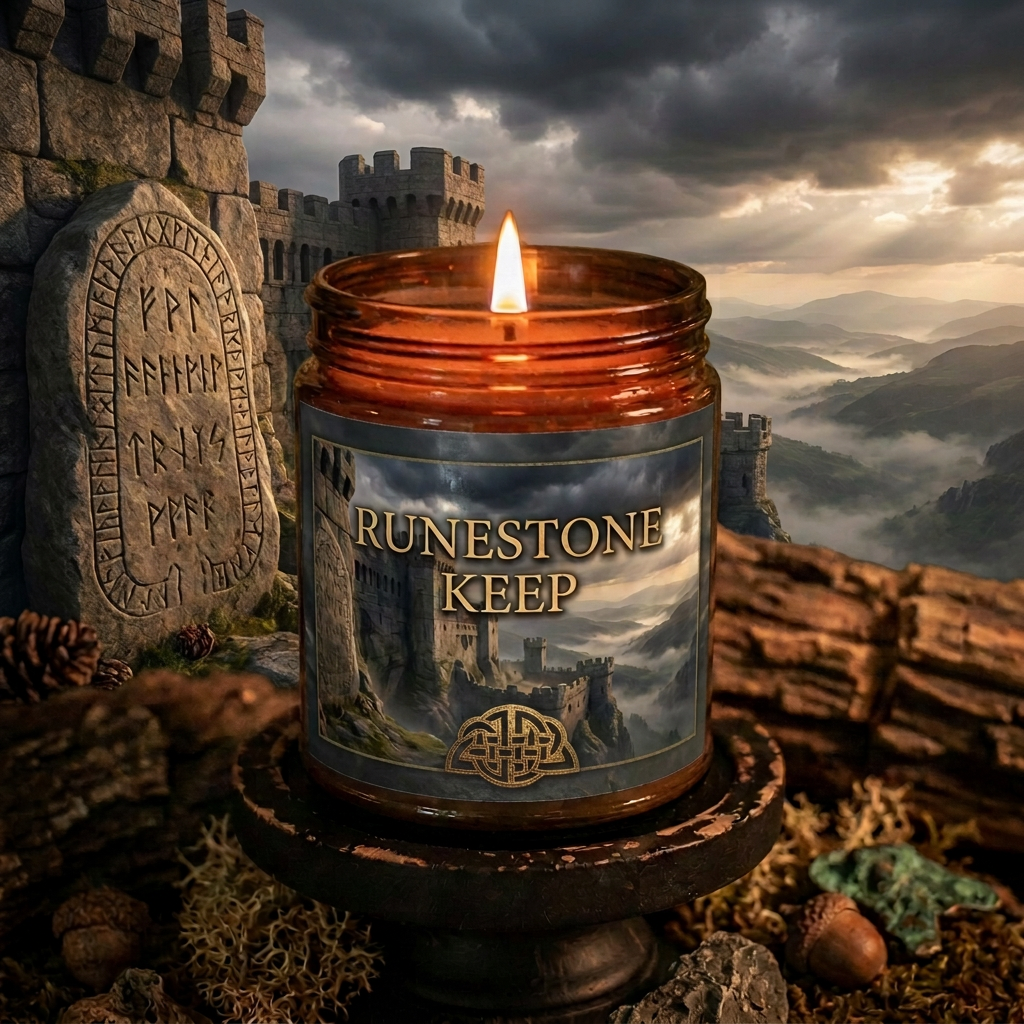
Runestone Keep was built where the mountains fall away into deep valleys. Its walls are carved directly from the stone of the cliffs, making it difficult to tell where the mountain ends and the fortress begins.
Centuries of storms have worn its battlements smooth. Yet the keep still stands.
The outer walls stretch along the ridge like a spine of dark stone, broken only by narrow watchtowers that rise above the wind. The gates remain closed, their iron hinges rusted by time and weather.
But the wind never stops moving through the keep. It slips through arrow slits and open courtyards. It whispers along the ramparts. It moves through the empty halls like a quiet memory.
Travelers who reach the gates often notice the scent first.
The highlands carry a particular fragrance—cold and clean.
The smell of mist drifting across rock. The scent of rain-soaked stone after a passing storm. And beneath it all, the quiet mineral depth of ancient walls that have stood against centuries of wind.
Inside the fortress, the air feels even colder.
Stone corridors wind through the keep like veins through the mountain. Narrow windows open to the cliffs beyond, allowing gray light and mountain wind to sweep through the halls. The sound of the wind changes depending on where you stand.
At the outer walls it roars. In the courtyards it swirls. Within the halls it whispers softly through narrow passages, brushing along the carved stone as if the fortress itself remembers the voices that once filled its chambers.
No fires burn in the hearths now. No banners hang from the towers. But Runestone Keep does not feel abandoned. It feels enduring.
The stone beneath your hand is cool and solid, its surface worn smooth by time. Lichen grows in the cracks between the blocks, and faint carvings can still be seen in the larger stones of the inner wall.
Ancient runes. Weathered beyond recognition.
Scholars believe the keep may have been built atop an even older structure, one carved by early highland builders who believed the mountains themselves held power.
Perhaps that is why the fortress was raised here—at the meeting point of stone, wind, and sky.
At the highest point of the keep stands the western battlement.
From there, the land stretches endlessly into the distance. Gray cliffs fall away toward green valleys. Mist moves slowly between the hills. And the wind carries the scent of cold air across miles of untouched highland.
Visitors who stand upon the wall often linger there. Not because the view is grand—though it is. But because something about the place feels timeless.
The wind sweeping across the stone. The quiet strength of the fortress. The sense that Runestone Keep has watched centuries pass without ever truly falling to them.
When travelers leave the highlands and descend back toward warmer lands, they often carry the memory of the keep with them. The cold wind. The scent of mist and ancient stone. And the feeling of standing atop a fortress that has outlasted time itself.
Now Available!
High among the mountains stands Runestone Keep, a weathered fortress carved into cold stone cliffs. Wind sweeps through ancient battlements as mist rolls across the highlands below. Notes of cold mountain air, damp stone walls, and the quiet strength of an ancient keep.
Become a Mythologie Insider


